
3 Vastu Adjustments for Your Bedroom
Make them Today — and Sleep Better Tonight !
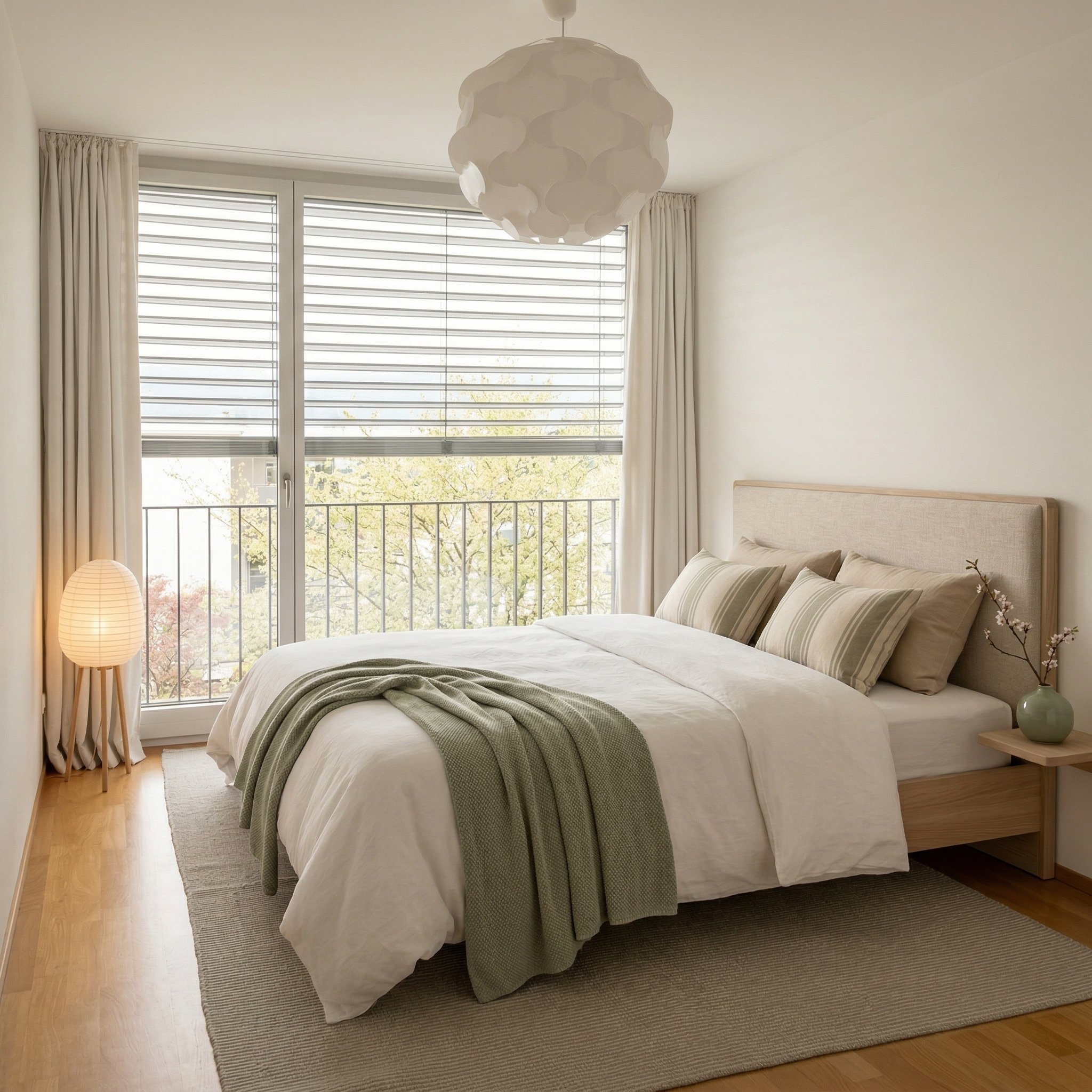
You've tried the new pillow. The blackout curtains. The sleep tracking app. And yet, something still feels off when you walk into your bedroom — or when you wake up in the morning, not quite rested.
What if the issue isn't what you've added to the room, but how the room itself is arranged?
Vastu Shastra, the ancient Indian science of space and energy, offers a different lens: your home has a geometry, a direction, an energetic logic. And your bedroom, where you spend a third of your life, is one of the most sensitive spaces in that equation.
The good news? You don't need to renovate. Here are three simple adjustments — grounded in Vastu principles — that you can make today.
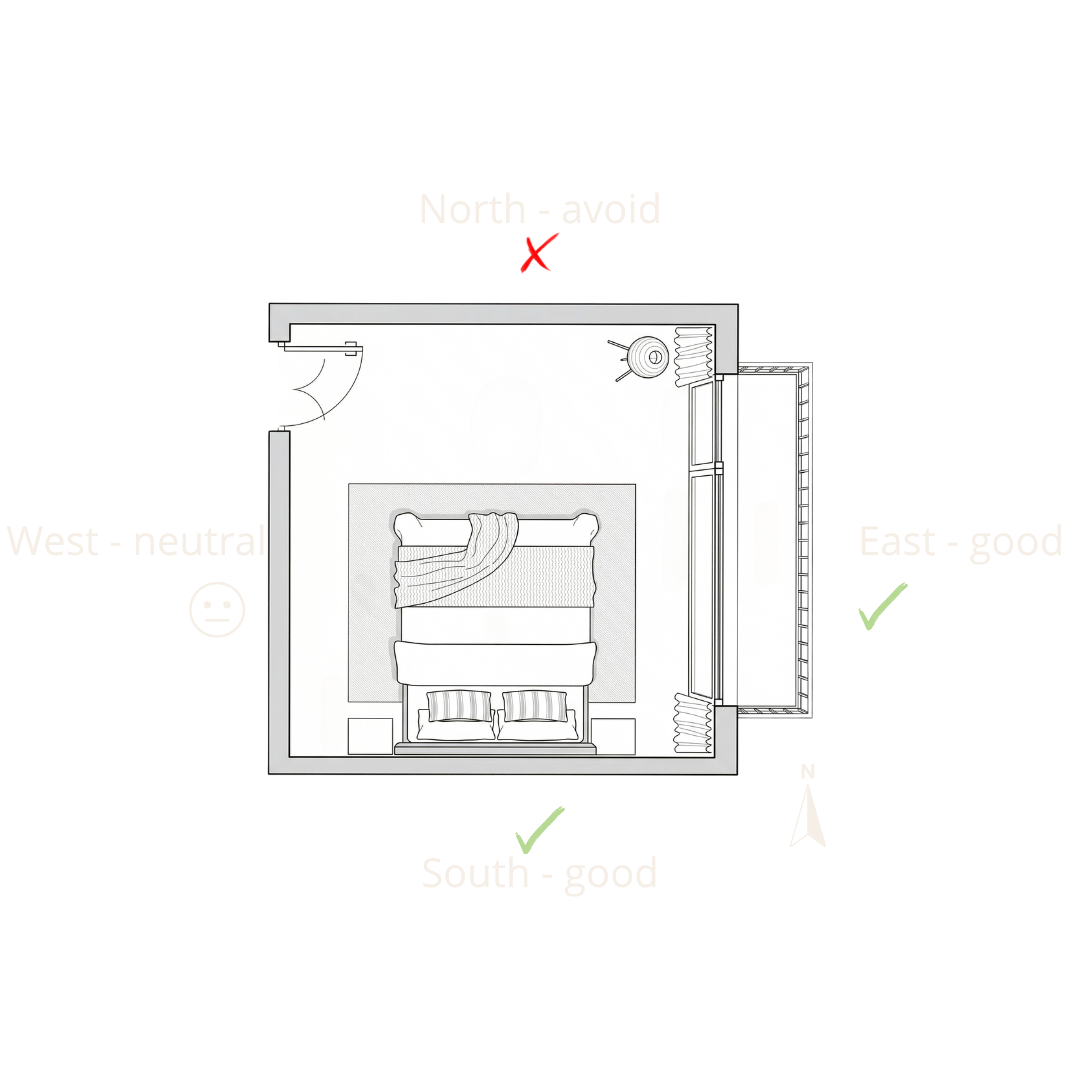
1. Reposition your bed — head pointing south or east
Check your bed orientation with a compass app — any phone has one. Ideally, your head should point south when you sleep. East works well too. The direction to avoid is north, and here's why: the Earth has a magnetic field that runs from north to south, and your body has its own polarity, with the head as the positive pole. Sleeping with your head pointing north creates a kind of resistance between the two — it disrupts circulation, keeps the mind more active than it needs to be, and prevents sleep from reaching the deep restorative stage you're actually after. Pointing south aligns you with the Earth's field rather than against it. It's one of those things that sounds almost too simple, and then you try it. Most people notice something within a few nights — less heaviness in the morning, a clearer head, a feeling of having actually rested.
2. Cover or move mirrors that face the bed
Stand at your bedroom door and look toward the bed. Is there a mirror — a wardrobe door, a full-length panel, a decorative piece — that reflects your sleeping body? If yes, it's worth addressing. In Vastu, mirrors are considered energetically active: they reflect and amplify whatever is in front of them, keeping energy in constant movement. In a bedroom, that's exactly the opposite of what you want. The room is meant to hold and restore, not activate. There's something older here too — many traditions, not just Vastu, share an instinctive discomfort with mirrors in sleeping spaces, and that's not coincidence. Cover the mirror at night with a piece of fabric, or reposition it so it faces a wall instead. It sounds like a small thing. Some clients describe the room feeling noticeably quieter after, more contained — like it finally settled.
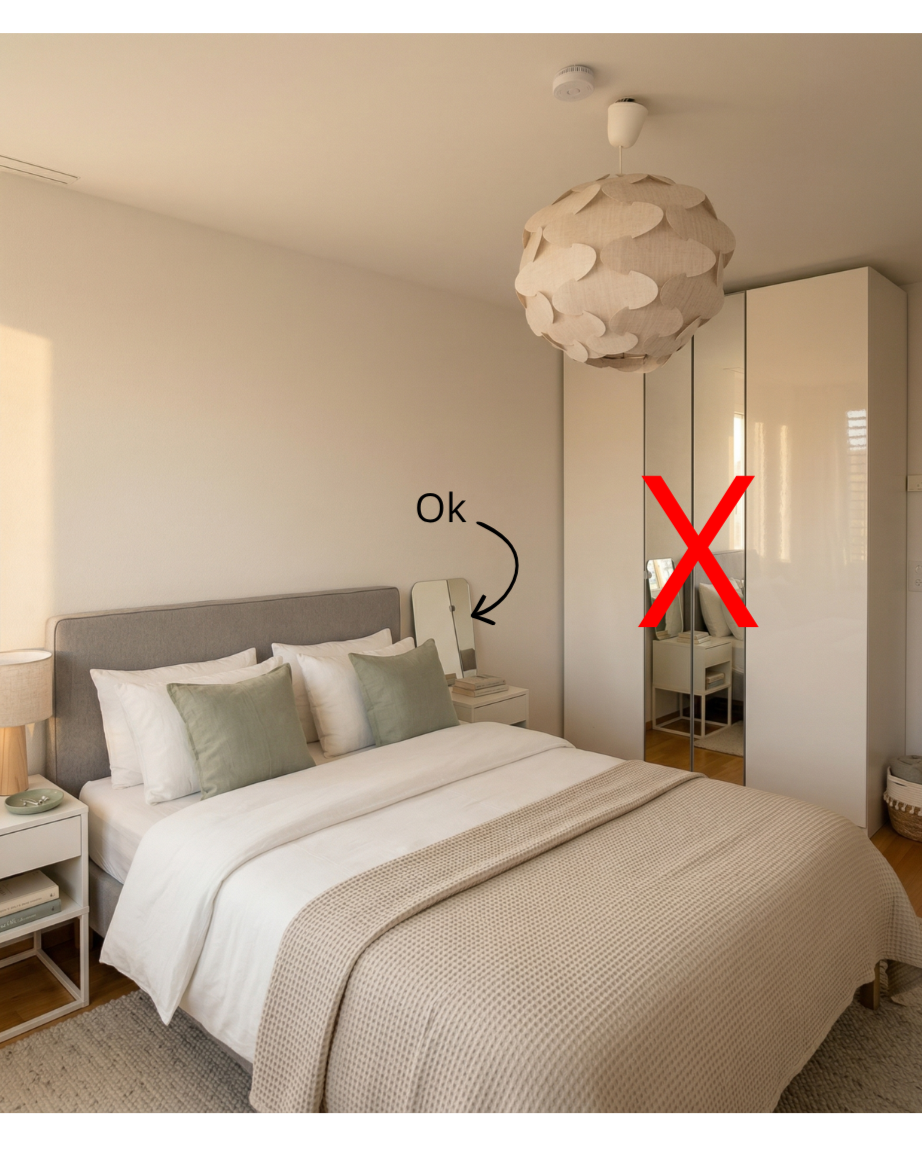
A linen panel draped over a wardrobe mirror works beautifully and can actually look intentional.
Soft fabric, warm tone, nothing fussy.
3. Clear the corners — especially the southwest
Walk to each corner of your bedroom and be honest about what's there. Piles of clothes, a forgotten bag, tangled cables, boxes that haven't moved since you arrived. In Vastu, corners are the anchoring points of a room — they hold and distribute energy into the space. When they're blocked, energy stagnates, and you feel it even when you can't name it. That low-level tension, the sense of a room being slightly heavy, often starts in the corners. The southwest corner in particular is associated with stability, groundedness and deep physical rest, so that's where to begin. Clear it out, then work your way around the room. If storage there is unavoidable, use closed containers — a basket with a lid, a small cabinet. Contained is not the same as cluttered. The effect is usually immediate: the room feels larger without anything visible having changed, and for people who wake frequently in the night, this is often the adjustment that makes the clearest difference.
Open piles are what block the flow. Closed, tidy storage is fine — the energy moves around it rather than through it.
Small shifts, real difference
None of this requires a renovation. You're not changing the architecture — you're changing the conversation between you and your space. Vastu isn't about perfection. It's about listening to your home with a little more attention, and letting small shifts create a cumulative difference.
Try one tonight. Notice how you sleep. Then try the next.
Want to know what your specific bedroom needs?
These three adjustments are a starting point. But every home is different — the orientation of your building, the layout of the room, the history held in the walls. A personalised reading goes much further.
I offer a free 20-minute discovery call — no commitment, just a conversation about your space and what it might need. If it feels like a fit, we go from there.
-> Book your free call at cbyc.ch/contact